 (208) 991-3502
 Meridian, ID






 December 27, 2025
You spent serious money on that new TV. Now it sits in the box while you stare at the empty wall and ask yourself one question. How high should it actually go? Mount it too high and you'll crane your...
How High to Mount a TV on a Wall: Floor-to-Center, Distance
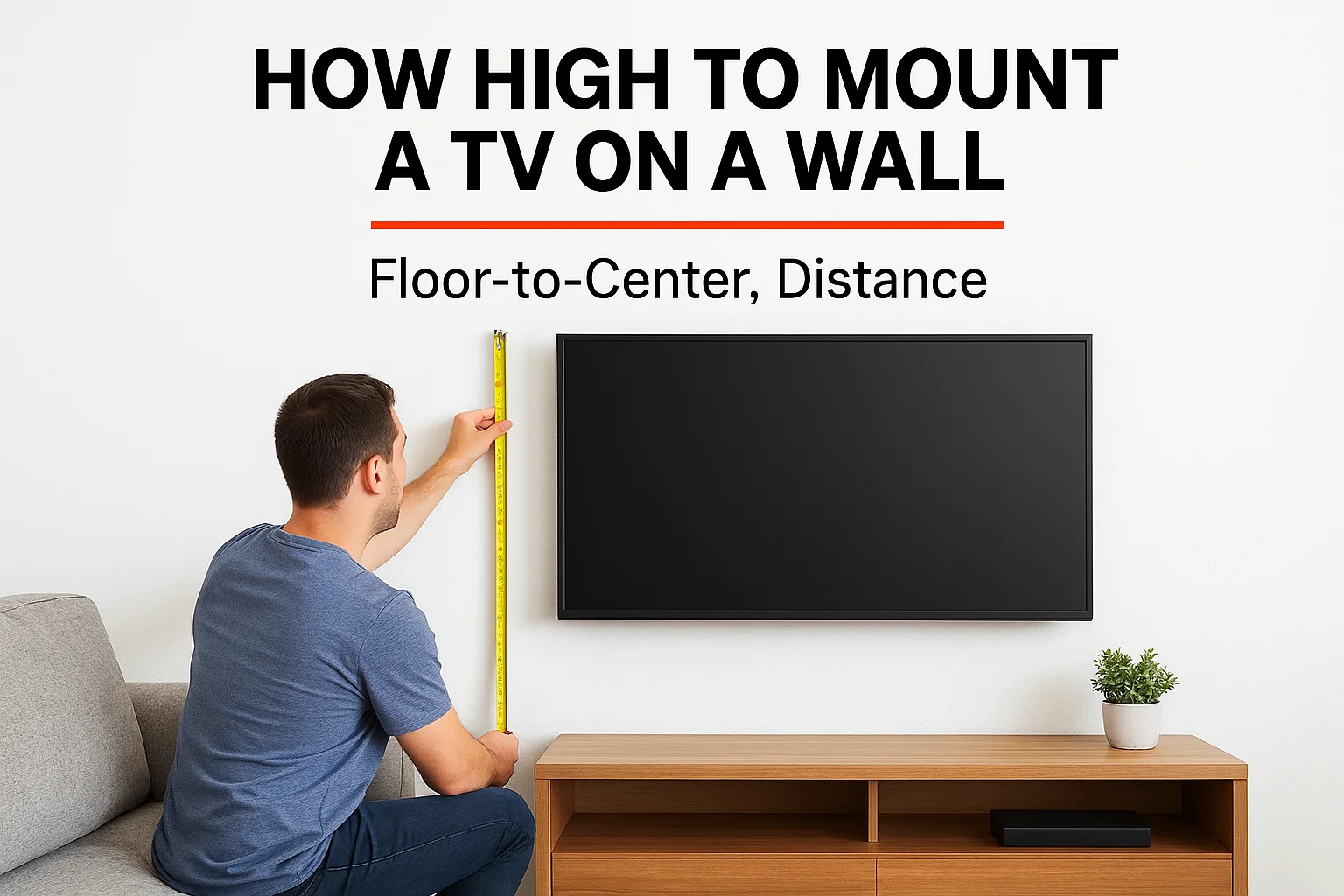
You spent serious money on that new TV. Now it sits in the box while you stare at the empty wall and ask yourself one question. How high should it actually go? Mount it too high and you'll crane your neck for every movie. Too low and the whole setup feels awkward. Most people guess and drill holes they later regret.
The answer comes down to one simple measurement. Your seated eye level should align with the center of the TV screen. For most living rooms this lands around 42 inches from the floor to the screen's center. But your room and furniture might demand something different.
This guide walks you through the exact steps to find your perfect TV mounting height. You'll measure your eye level, calculate the screen center, adjust for viewing distance, and account for your specific TV size and room layout. By the end you'll know exactly where to drill those holes with confidence.
What determines the right TV height
The question of how high to mount a tv on wall depends on three physical factors that work together. Your seated eye level creates the baseline measurement. Your TV dimensions set the actual center point you need to hit. The distance between your couch and the wall determines whether you'll need small adjustments up or down. Get these three elements aligned and you'll never think about TV height again.
Your seated posture and furniture height
Your couch height directly controls where your eyes land when you sit down to watch. A low modern sectional puts your eyes around 38 to 40 inches from the floor. A standard couch raises that to 40 to 42 inches. Plush recliners can push you up to 44 inches or higher. The furniture you actually own matters more than any generic rule.
Bedroom setups break these rules completely. When you're propped up on pillows or lying flat, your eye level shoots up to somewhere between 48 and 60 inches from the floor. This is why bedroom TVs always mount higher than living room screens. Your viewing posture changes everything.
Mount the TV center at your actual seated eye level, not at a number you read online.
Screen size and aspect ratio
Larger screens force you to think about proportions differently. A 65-inch TV stands about 32 inches tall, while a 55-inch model measures roughly 27 inches top to bottom. When you mount the center at 42 inches, that 65-inch screen stretches from about 26 inches off the floor up to 58 inches high. Your peripheral vision needs to capture the whole screen without forcing your eyes to scan up and down constantly.
Viewing distance and angles
Sit 8 feet away from a 65-inch TV and the 42-inch center height works perfectly. Move your couch to 12 feet and you might want to raise the TV an inch or two so the whole screen sits more naturally in your field of view. The SMPTE guideline suggests your TV should fill about 30 degrees of your vision, which means distance and height work as a pair. Closer seating demands stricter height precision.
Step 1. Measure your seating eye level
Before you touch a drill or mount, you need one critical measurement. Your seated eye level determines everything else about how high to mount a tv on wall. This measurement takes less than five minutes but saves you from mounting your TV in the wrong spot and drilling new holes later. The number you get here becomes your baseline for every calculation that follows.
Sit in your actual viewing position
Walk over to your couch or chair where you'll watch TV most often. Sit down exactly how you normally would during a movie night. Lean back naturally and let your body settle into its comfortable position. Don't sit up straight like you're at a job interview. Most people slouch slightly or recline when they watch TV, and that relaxed posture changes your eye height by several inches compared to sitting upright.
Take the measurement
You need a helper and a tape measure for this step. Stay seated in your natural position while someone measures from the floor straight up to the center of your eyes. Hold your head level and look straight ahead at the wall where your TV will hang. The tape measure should run vertically from the floor to your eye line. Write this number down in inches.
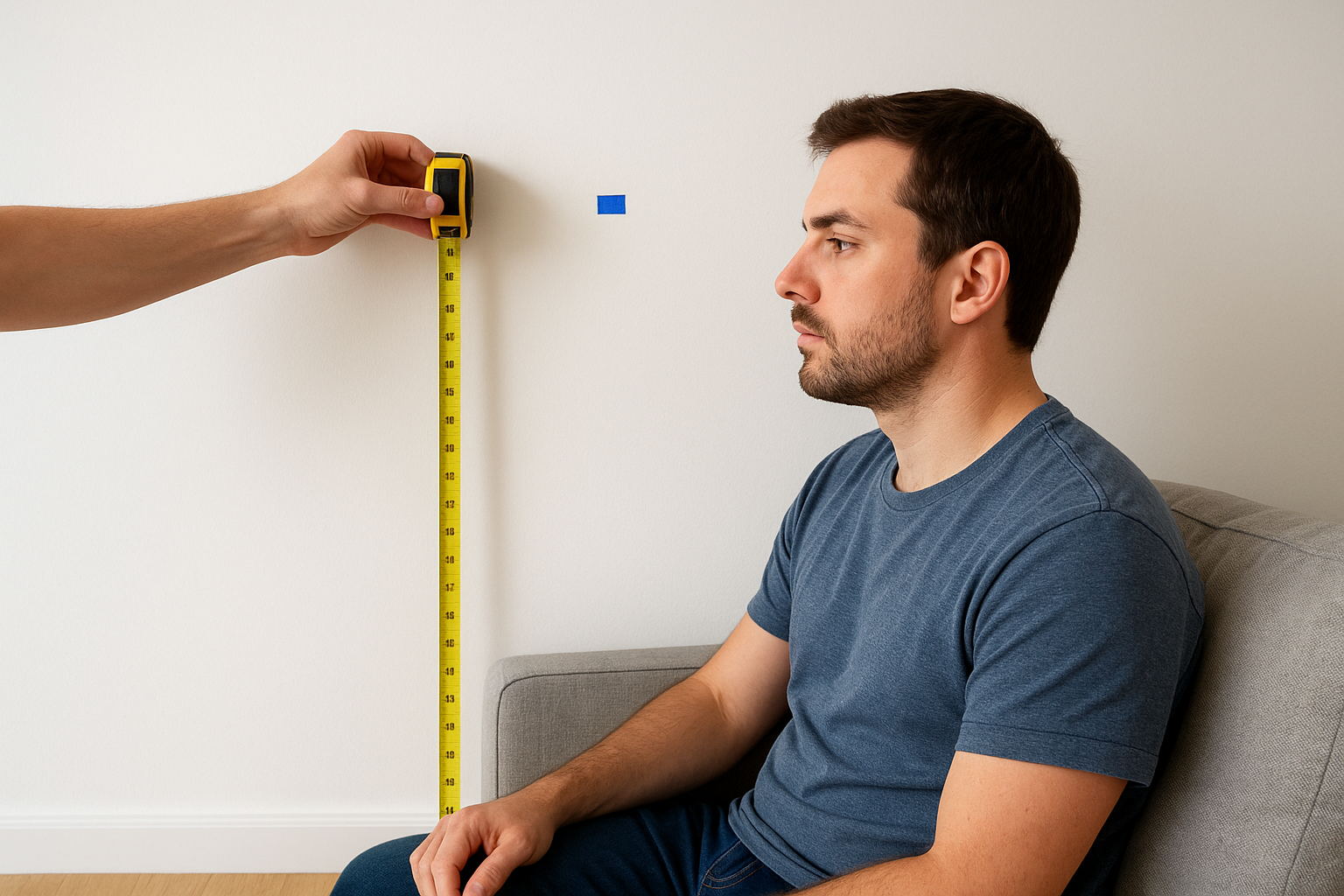
This single measurement matters more than any generic 42-inch guideline you'll find online.
If you're measuring alone, mark the wall with a small piece of painter's tape at your eye level while seated. Stand up and measure from the floor to that tape mark. Most living room setups land somewhere between 38 and 44 inches depending on your furniture height and how you sit. Bedrooms often measure 48 to 60 inches because you watch from a reclined position with your head propped on pillows.
Step 2. Find your TV center from the floor
You measured your eye level in Step 1. Now you need to figure out exactly where that measurement translates on the wall for your specific TV. This step requires knowing your TV's physical height from top to bottom. The center of your screen should match your seated eye level measurement, which means you need to calculate where that center point falls on the actual television.
Measure your TV's physical dimensions
Pull out your tape measure and measure your TV from the top edge to the bottom edge of the screen itself. Don't include the stand if it's attached. Just measure the display panel. Write this total height down. A 55-inch TV typically measures about 27 inches tall. A 65-inch TV usually comes in around 32 inches. The diagonal screen size you see in marketing doesn't tell you the actual height.
Calculate where the center sits
Take your total TV height and divide it by two. That gives you the distance from the bottom edge of your TV up to its center. A 55-inch TV that measures 27 inches tall has its center point at 13.5 inches from the bottom. A 65-inch TV at 32 inches tall has its center at 16 inches up from the bottom edge.
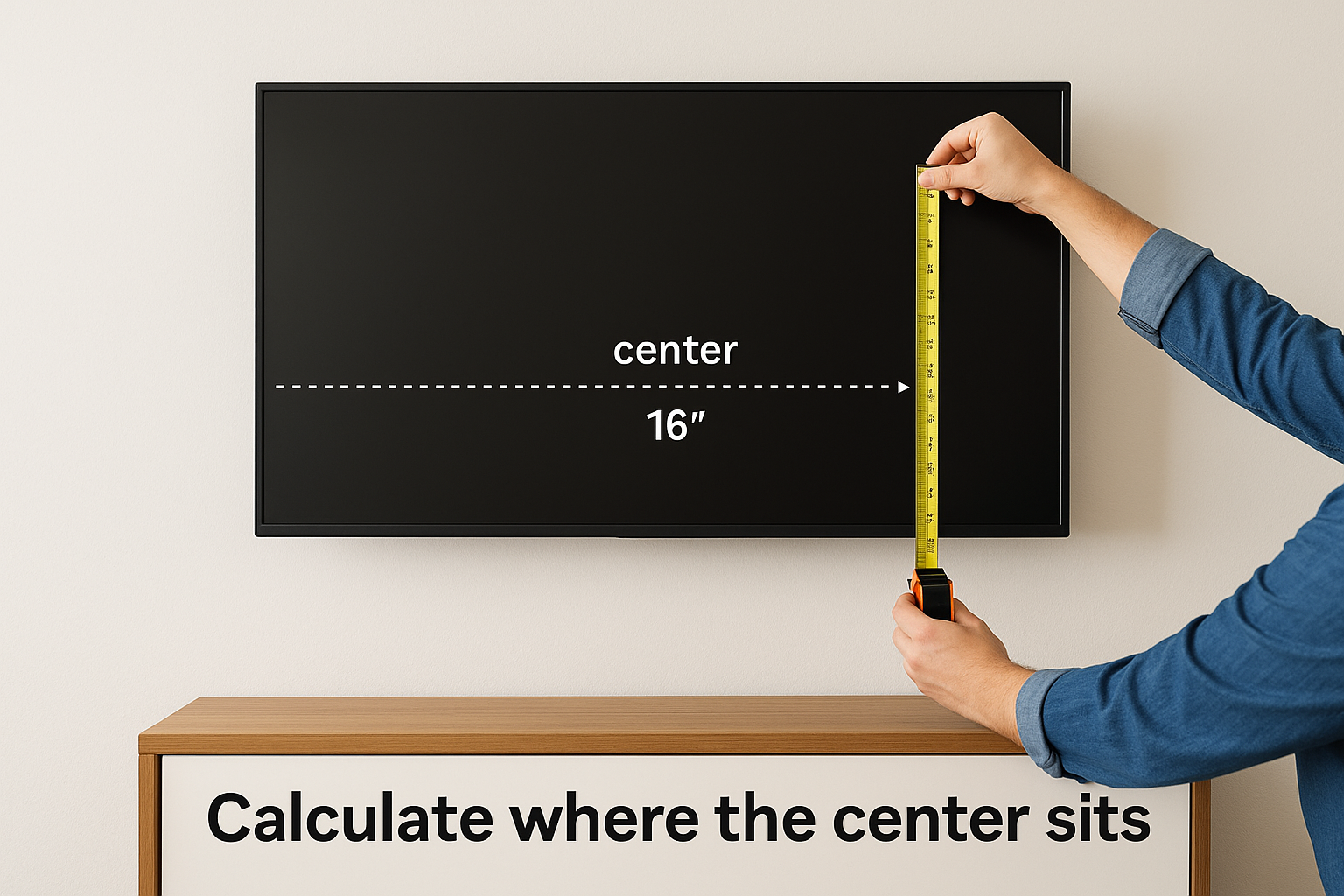
This center point number tells you how much space sits below the middle of your screen once mounted.
Here's how the math works for common sizes when you're figuring out how high to mount a tv on wall:
| TV Size | Total Height | Center from Bottom |
|---|---|---|
| 55" | ~27 inches | ~13.5 inches |
| 65" | ~32 inches | ~16 inches |
| 75" | ~37 inches | ~18.5 inches |
Keep both numbers handy. You'll use your eye level measurement from Step 1 and this center offset from Step 2 to determine your exact mounting position in the next step.
Step 3. Adjust for TV size and distance
You have your eye level measurement and your TV's center point. Now you need to account for viewing distance and screen size to make final adjustments. Your couch-to-TV distance changes how the screen fills your field of view, which can require raising or lowering the mount by an inch or two. Larger TVs often need slight height increases when you sit farther away, while smaller screens at closer distances work better at exact eye level.
Calculate your optimal viewing distance
Your viewing distance should fall between 1.5 to 3 times your TV's diagonal screen size for the most comfortable experience. A 65-inch TV works best when you sit 8 to 13.5 feet away. For a 55-inch screen, aim for 7 to 11.5 feet. A 75-inch display needs 9.5 to 15.5 feet of distance. Measure from your couch to the wall where the TV will mount and check if you fall within this range.
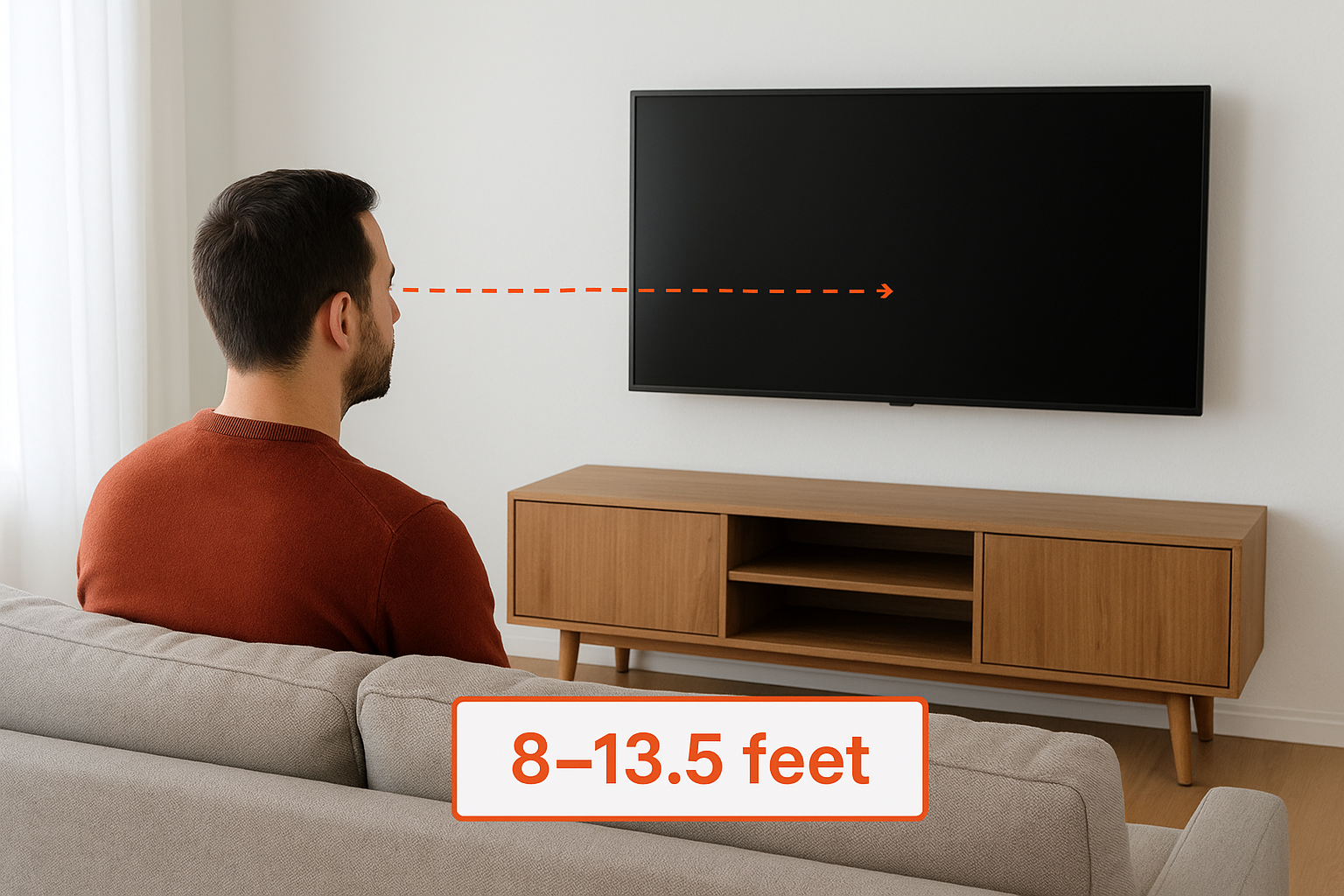
If your couch sits closer than the minimum recommended distance, the screen will dominate your peripheral vision. You'll find yourself scanning from corner to corner during movies. Sitting farther than the maximum distance makes details harder to see and reduces the immersive quality you want from a large screen.
Make small height adjustments
When you're within the ideal viewing distance range, stick with your eye level measurement from Step 1 as your TV center. Your setup will feel natural and comfortable without any modifications. If your couch sits at the far end of the range or beyond, raise the TV center by 1 to 2 inches above your seated eye level. This subtle lift helps balance the larger visual field the screen occupies from that distance.
Add only small increments when adjusting how high to mount a tv on wall based on distance.
A concrete example shows how this works in practice. Your seated eye level measures 42 inches and you own a 75-inch TV with your couch 12 feet away. That distance puts you in the ideal range, but toward the farther end. Mount your TV center at 43 or 44 inches instead of exactly 42. The extra inch or two compensates for the viewing angle and keeps the entire screen comfortable to watch.
Step 4. Plan your mount and room layout
Your TV height works in tandem with the physical constraints of your room and the type of mount you choose. Wall studs, furniture placement, and viewing angles all affect where you can actually install your TV. The mount type you select determines how much flexibility you'll have to fine-tune the screen position after installation. Consider these factors now before you mark your drill holes.
Choose your mount type
Fixed mounts hold your TV flat against the wall with no adjustment options. They work perfectly when your eye level measurement puts the TV exactly where you want it with no angle adjustments needed. Tilting mounts let you angle the screen downward by 5 to 15 degrees, which solves problems when you mount above fireplaces or need to compensate for higher placement. Full-motion mounts swivel, extend, and tilt in multiple directions, giving you complete control over viewing angles from different seating positions.
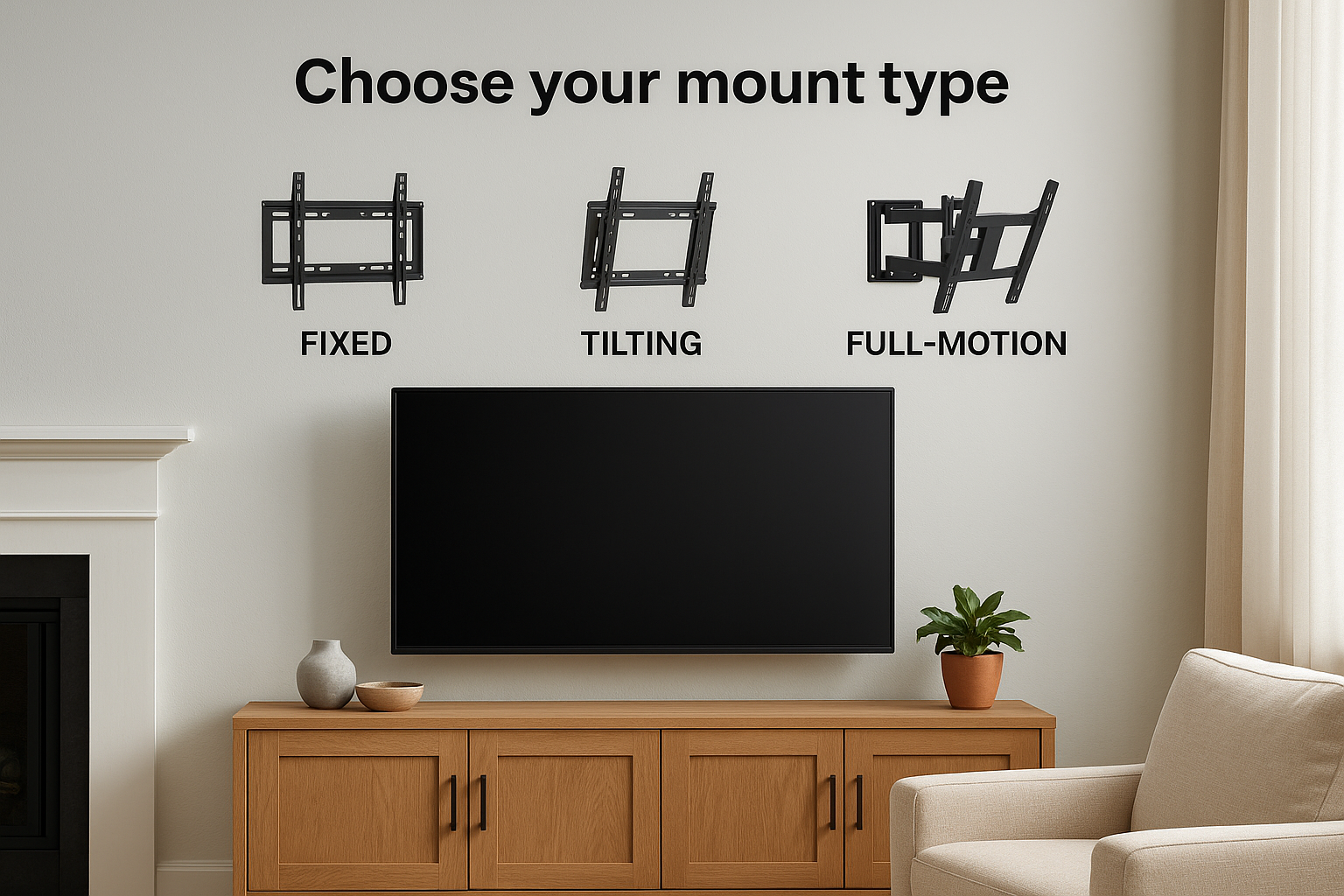
Tilting mounts add crucial flexibility when room layout forces you to mount higher than your ideal eye level.
Pick a fixed mount when you know your exact mounting height works and you want the cleanest look. Choose a tilting mount for above-fireplace installations or bedrooms where you watch from a reclined position. Full-motion mounts work best in corner placements or rooms with multiple viewing angles.
Account for room obstacles
Fireplace mantels force you to mount higher than your calculated eye level from Step 1. Measure at least 4 to 8 inches of clearance between the mantel top and your TV's bottom edge. Run your fireplace for an hour and check if the wall gets hot where the TV will sit. Windows and lighting create glare problems when positioned directly behind or beside your seating area. Shift your TV position left or right to avoid direct light hitting the screen during your typical viewing hours.
Mark your wall studs with painter's tape before making final decisions on how high to mount a tv on wall. Most walls have studs every 16 inches, and your mount needs to hit at least two studs for secure installation.
Extra examples and quick reference
You've worked through the measurement process and understand how high to mount a tv on wall based on your specific setup. Now you need quick reference numbers and real-world examples to validate your calculations. The tables and scenarios below give you concrete starting points for common TV sizes and room configurations so you can double-check your work and see how your measurements compare to typical installations.
Quick mounting heights by TV size
Standard mounting heights work as starting baselines when your seated eye level falls around 42 inches from the floor and your viewing distance matches the recommended range. These measurements show the distance from the floor to the TV's center point for popular screen sizes.
| TV Size | Screen Height | Center from Floor | Bottom Edge from Floor |
|---|---|---|---|
| 43" | 21 inches | 40-42 inches | 29-31 inches |
| 55" | 27 inches | 42 inches | 28.5 inches |
| 65" | 32 inches | 42-44 inches | 26-28 inches |
| 75" | 37 inches | 43-45 inches | 24.5-26.5 inches |
| 85" | 42 inches | 44-46 inches | 23-25 inches |
These numbers assume average furniture height and standard living room setups. Your specific measurements from Steps 1 through 3 take priority over these reference points.
Common room configurations
Different room types demand different mounting approaches. A living room with a standard sofa puts your eyes at 40 to 42 inches when seated, which means mounting a 65-inch TV with its center at 42 inches places the bottom edge at 26 inches from the floor. The top edge reaches 58 inches high, keeping the entire screen comfortably within your natural field of view.
Bedroom installations shift everything upward because you watch from a reclined position. Mount your 55-inch TV center at 55 to 60 inches from the floor when you prop yourself up on pillows. This puts the screen's center well above where it would sit in a living room but aligns perfectly with your elevated eye level in bed.
Above-fireplace mounting forces compromises in height. Your mantel might sit 50 to 55 inches from the floor, which means your TV center ends up at 60 to 65 inches or higher. A tilting mount becomes essential here to angle the screen down 10 to 15 degrees toward your seating position.
Always prioritize your actual seated eye level measurement over standard reference numbers.
Corner placements work best with full-motion mounts that extend and swivel. Mount the TV at your calculated eye level when the arm is fully extended, then adjust the swivel angle to face your primary seating area directly.

Final thoughts
You now have the complete framework for determining how high to mount a tv on wall in any room. Start with your seated eye level measurement, find your TV's center point, adjust for viewing distance, and plan around your room's physical constraints. These four steps eliminate guesswork and prevent the regret that comes with holes drilled in the wrong spot.
The 42-inch guideline serves as a useful starting reference, but your specific measurements matter more than any generic rule. Your furniture height, TV size, viewing distance, and room layout create a unique mounting height that works perfectly for your space. Take the time to measure correctly and you'll enjoy comfortable viewing for years.
Need help with your TV installation in the Treasure Valley area? Contact our team for professional mounting services that get the height right the first time.